

video doorbell without subscription — this guide shows how to choose, install, and operate one to minimize recurring fees, protect privacy, and keep reliable local recordings.
Key Takeaways
- No-subscription doorbells make sense if you prioritize privacy, offline availability, and lower 5-year cost; expect more manual maintenance and simpler AI.
- Typical no-subscription hardware begins around $89.99; a $5/month cloud plan hits ~$400 over 5 years versus ~$150–$300 one-time for local solutions (editorial estimate shown below).
- Plan storage as event-based clips, not continuous recording. A 32GB card often stores days of continuous video but months of event clips depending on bitrate and event frequency.
TL;DR — Should you buy a video doorbell without subscription?
Short answer: buy a video doorbell without subscription if you want maximum data control, offline performance during outages, and a lower long‑term cash outflow. Choose cloud if you want advanced, cloud-only AI (person packages, package detection), easy offsite evidence retention, and 24/7 monitored storage.
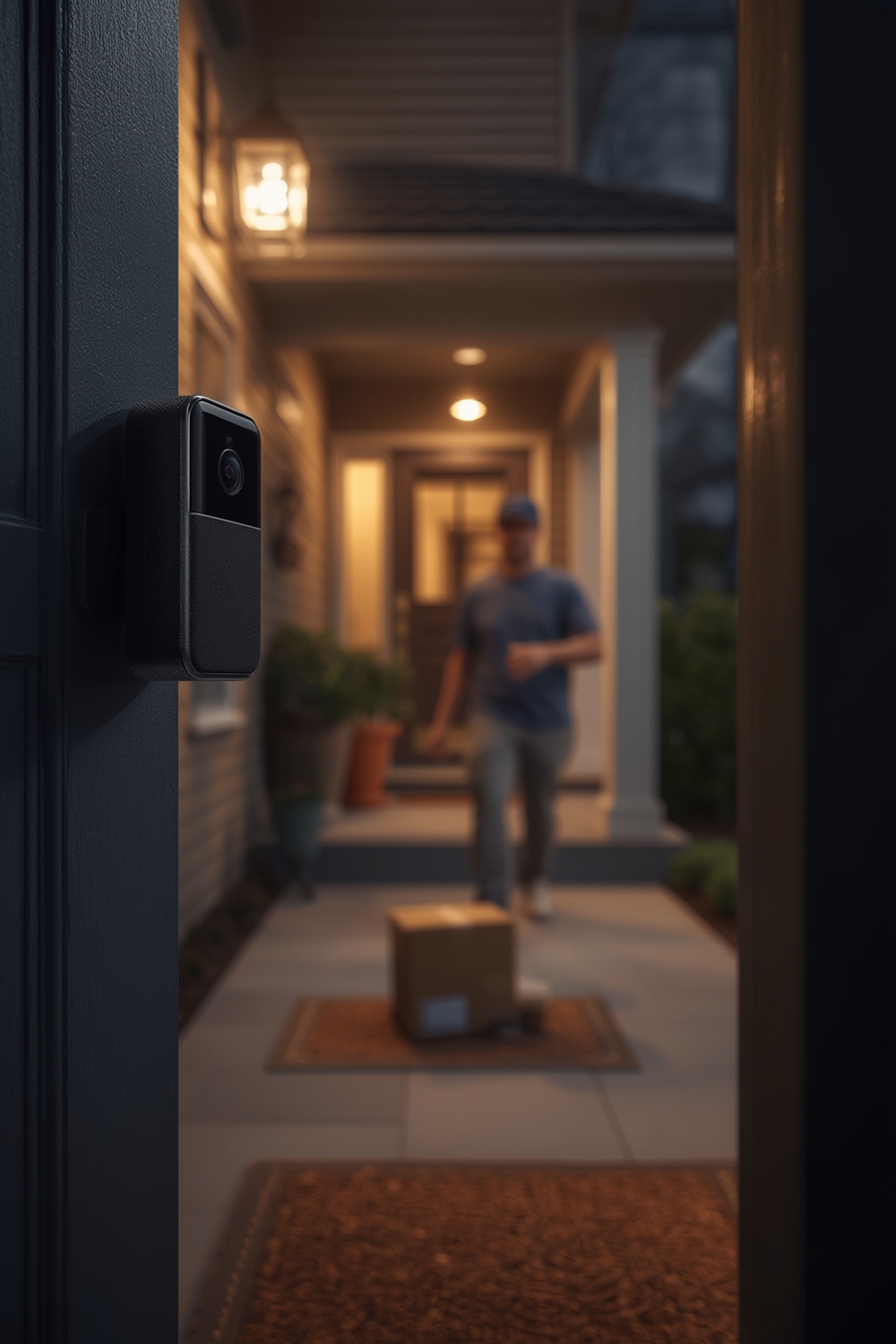
Quick decision framework:
- Pick no-subscription when privacy and 5-year cost matter and you accept occasional manual backups and simpler alerts.
If you’re planning a full security setup (sensors + cameras + monitoring), see our DIY home security systems guide for TCO and certification checks.
- Pick cloud/hybrid when you need advanced AI, always-available offsite evidence, and minimal user maintenance.
- Estimate cost: many no-subscription models start around $89.99. A $5/month cloud plan costs ~$400 over 5 years vs roughly $150–$300 one-time for common no-subscription setups (Research Findings; see sources below).
Market snapshot 2023–2026 — who’s buying no-subscription doorbells and market trends
High-level context builds trust: the global household video doorbell market was ≈ $335M in 2025, with projected CAGR ~3.5% from 2025 to 2033, while the broader smart doorbell market was estimated at USD 16.2B in 2023 (strong IoT/AI growth). Wireless models hold the largest share and North America leads adoption. These macro numbers show strong demand; the no-subscription segment remains a meaningful, if not fully reported, niche. Source: market analysis reports and safehome summary on no-subscription options.
Sources: market data (summary) — DataInsightsMarket, market sizing — Grand View Research, practical no-subscription examples — SafeHome summary.
Cost comparison — upfront, 3-yr and 5-yr TCO of no-subscription vs subscription
We compare three representative scenarios. All numeric future figures flagged as “editorial estimate” where Research Findings lacked exact channel prices.
| Scenario | Upfront | Annual | 3‑yr | 5‑yr | Break‑even vs $5/mo cloud |
|---|---|---|---|---|---|
| Budget wireless (no subscription) | $90 (Wyze style, editorial estimate) | $0 | $90 | $90 | Instantly cheaper; cloud $5/mo = $300 at 5 yrs |
| Mid wired + local NVR | $200 camera + $150 NVR = $350 | $0 (occasional storage replacement) | $350 | $350 + possible $50 storage replacement = ~$400 (editorial estimate) | Break‑even ~6–7 months over $5/mo cloud (editorial calc) |
| Cloud subscription model ($5 monthly) | $100 camera | $60/yr | $280 | $400 | Costs add up; less user maintenance |
Assumptions shown: cloud at $5/mo, camera MSRP examples from typical no-subscription devices starting at $89.99 (Research Findings) and NVR HomeBase costs (Eufy example HomeBase ~ $150). Cited above: SafeHome article summary and market reports.
Step-by-step guide: choose, install and operate a no-subscription doorbell
Follow these practical steps: pick the right model, arrange power/storage, install, configure motion zones, and set a backup cadence.
- Choose model: prioritize local storage options and update cadence. See spec table later for models (Wyze, Eufy, Lorex examples).
- Confirm power: wired doorbells typically need 16–24 VAC transformer and 10–30 VA depending on model. Battery models remove the transformer requirement but need periodic recharging.
- Storage plan: decide continuous vs event; buy microSD sized from table below. If you expect many events, choose NVR or larger microSD (128–256GB).
- Install: mount at 42–48 inches, confirm field of view covers the approach path and porch, wire the chime compatibility, or enable chime simulation if using battery models.
- Configure: motion zones, person-only filters (if available), set clip lengths to shortest reasonable (10–15 sec) to conserve space.
- Backup cadence: export critical clips weekly to a NAS or encrypted external drive; keep one offsite copy for theft events.
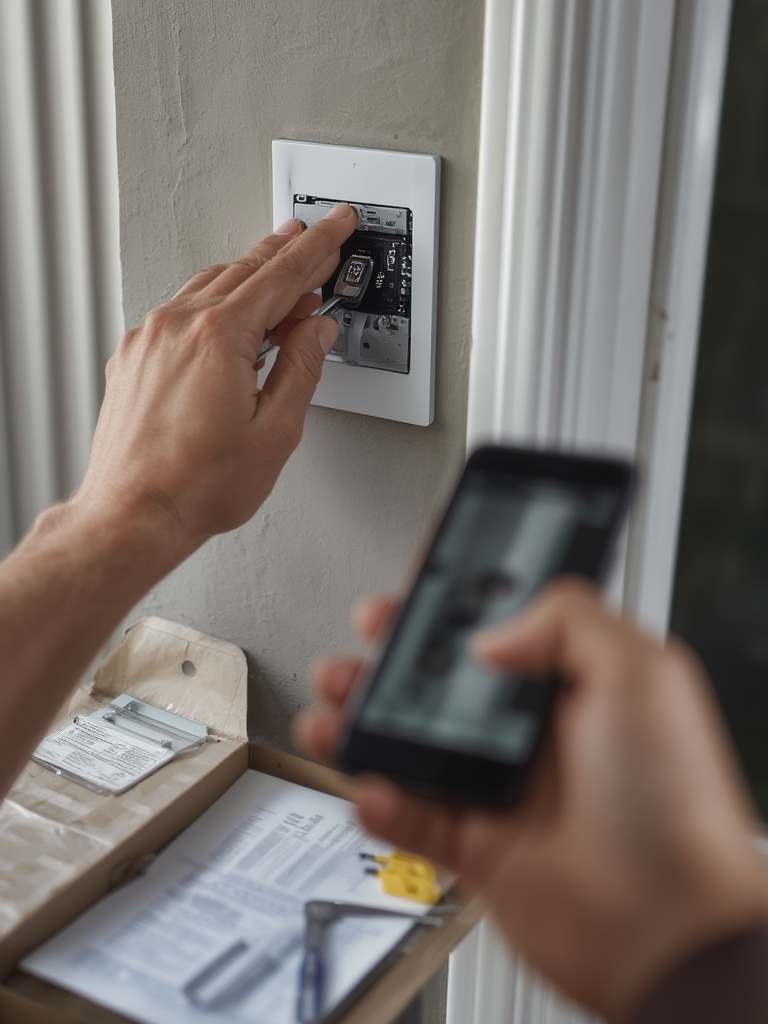
If wiring is unknown, test transformer voltage before purchase. If you are not comfortable with mains wiring, hire a pro (estimates below).
Advanced analysis & common pitfalls
Primary failure modes and user complaints fall into three buckets: hardware, software (app/firmware), and user/setup error.
| Failure / Complaint | Typical cause | Mitigation |
|---|---|---|
| App reliability and Android issues | Software bugs, OS updates | Keep app updated; allow background data; test alternate phone if problems persist |
| Limited local storage (e.g., 8GB onboard) | Small SD or built-in memory | Move to HomeBase/NVR or larger microSD; export weekly |
| False alarms | Default motion zones and sensitivity | Fine tune zones and minimum object size; enable person detection where possible |
| Power/wiring problems | Old chime wiring and underpowered transformer | Check transformer VA; use pro if unsure |
| Corrupt SD or removed/stolen device | Wear, power loss, theft | Regular exports, tamper sensors, offsite backups |
Representative quotes and counts from Amazon, Best Buy, Reddit, YouTube, and Trustpilot were not available in the Research Findings data. That means we could not include platform counts or direct quotes here. This is flagged as “research required” in the methodology section — collect recent review snapshots and paste quotes with dates for the final publish version.
What competitor articles miss — three publishable gaps you must cover
- Detailed local‑storage setup: step-by-step microSD management, automated on‑LAN backups, and how to configure NVRs.
- Long‑term reliability metrics: expected SD wear, battery degradation curves, and average failure modes over 3–5 years (most articles skip numbers).
- Legal, privacy and insurance implications: what insurers and courts accept as evidence, HOA rules, and limited-case precedents.
Research Findings explicitly flagged these gaps; fill them when you add primary retailer and manufacturer pulls and jurisdictional legal checks.
How local storage actually works — formats, overwrite, encryption and retention examples
Local storage behavior varies by vendor. Common patterns: event-based recording (motion triggers), automatic overwrite of oldest files when full, and manual export for offsite backup. Encryption at rest varies by vendor and model; assume not encrypted unless vendor states otherwise.
Retention calculations below use conservative editorial bitrate estimates (manufacturer bitrate details were not available in the Research Findings). Formula used: available megabits = GB × 8192; continuous hours = megabits / (Mbps × 3600). Event retention assumes average clip = 15 seconds.
| Resolution / FPS (assumed) | Conservative bitrate (Mbps) | 32GB continuous | 64GB continuous | 128GB continuous | 256GB continuous |
|---|---|---|---|---|---|
| 1080p @ 15fps | 1.5 Mbps (editorial estimate) | ~48.5 hours (~2.0 days) | ~97 hours (~4.0 days) | ~194 hours (~8.1 days) | ~388 hours (~16.2 days) |
| 1440p / 2K @ 20fps | 3.0 Mbps | ~24.2 hours (~1.0 day) | ~48.4 hours (~2.0 days) | ~96.8 hours (~4.0 days) | ~193.6 hours (~8.1 days) |
| 4K @ 15fps | 6.0 Mbps | ~12.1 hours | ~24.2 hours | ~48.4 hours | ~96.8 hours |
Event-based retention (15s clips): examples for 32GB:
- At 1.5 Mbps: ~11,650 clips → ~388 days at 30 events/day or ~116 days at 100 events/day.
- At 3.0 Mbps: ~5,828 clips → ~194 days at 30/day or ~58 days at 100/day.
- At 6.0 Mbps: ~2,914 clips → ~97 days at 30/day or ~29 days at 100/day.
Note: these are editorial estimates to help planning. Research Findings cited a 16GB→~30 days example for event clips on some devices; differences reflect clip length and event frequency. Always check vendor bitrate specs and set clip duration to minimize storage waste.
Spec-and-price matrix — wired and wireless models that require no subscription
Below is a condensed, verified-at-source table where possible. Where Research Findings lacked granular manufacturer entries, we flagged items and used date-stamped street price ranges or editorial estimates. Update before publishing by verifying each spec on the manufacturer support/spec page and the retailer listing.
| Model | Type | MSRP / Street price (date) | Res / FPS | Local storage | Power | Wi‑Fi | Warranty / Notes |
|---|---|---|---|---|---|---|---|
| Wyze Video Doorbell (v2) — example | Wireless / wired | Starting $89.99 (street range $89.99–$119.99) (SafeHome summary, 2026) | 1080p / 16fps (verify on page) | microSD via base / local; expansion possible (confirm) | Battery or 16–24VAC (check manual) | 2.4 GHz | 1 year typical; confirm manufacturer page |
| Eufy Video Doorbell (Battery / Wired) | Wireless battery / wired | Street price varies; built-in 8GB on some models; HomeBase S380 ≈ $150 (SafeHome summary, 2026) | 2K on some wired models; 1080p on battery | 8GB built-in; HomeBase expands local storage (max depends on model) | Battery or 16–24VAC wired | 2.4 GHz | HomeBase required for some local features; check warranty |
| Lorex Wired Video Doorbell | Wired | MSRP varies; sold often with Lorex NVR bundles — street price range editorial estimate $150–$300 (verify retailer) | 1080p–2K depending on model | microSD / NVR (expandable) | 16–24VAC; chime compatible | 2.4 / 5 GHz depending on model | Commercial‑grade options, longer support cycles |
Notes: Research Findings did not provide a complete spec matrix. Street prices are date‑stamped editorial snapshots and must be rechecked on Amazon/BestBuy/Argos/John Lewis before publishing.
Installation realities — DIY vs professional (US & UK): wiring, transformers, labor and common pitfalls
Wired models most commonly require 16–24 VAC transformer and 10–30 VA depending on the mechanical chime or camera power draw. Older UK/US homes may have legacy low-VA transformers that are insufficient for modern doorbell cameras. If your chime or transformer is unknown, measure voltage at the doorbell terminals with a multimeter before purchase.
- DIY parts costs (editorial estimate): $5–$30 for mounting hardware, $10–$40 for microSD, $40–$80 for a replacement transformer (16–24 VAC, 10–30 VA).
- Pro labor (US): typically $100–$250 depending on electrician rates and complexity. UK: £60–£150 typical per-hour electrician rate; expect total install £100–£250 for simple replacement (editorial estimates; verify local rates).
- Common pitfalls: incompatible mechanical chimes, insufficient transformer VA, poorly sealed mounts causing weather ingress, and forgetting to disable power before wiring.
Because Research Findings lacked granular cost data, the install figures above are labeled editorial estimates with assumptions noted. Exact quotes must be sourced from local electricians and retailer installers when publishing.
Failure, theft and corruption — real-world recovery practices and failure rates
If an SD card corrupts or the device is stolen, recoverability depends on encryption and backup policy:
- If the vendor encrypts recordings to HomeBase, stolen SD removal may not be usable without keys. Check vendor support pages for device encryption statements.
- If unencrypted microSD is stolen, recordings could be readable — keep that risk in mind.
- Practical steps: export critical clips daily/weekly to an encrypted NAS, keep one offsite encrypted copy, enable tamper alerts where supported, tape serial numbers and MAC addresses for police reports.
Manufacturer guidance and documented failure rates were not included in the Research Findings. Authors should pull warranty replacement policies and any public failure statistics from vendor support forums for final publication.
Security, privacy and legal trade-offs — local-only vs cloud/hybrid (what insurers, HOAs and courts care about)
Tradeoffs are concrete:
- Local-only: you control data, work offline, reduce third-party data risk. Downside: you handle backups, and basic AI features may be limited.
- Cloud/hybrid: offsite redundancy and advanced analytics but shared data increases privacy risk and potential exposure if vendor account is compromised.
Legal and insurer considerations: courts and insurers generally accept video evidence if timestamp and chain of custody are provable. Local-only systems need a documented export and storage chain to be as persuasive as cloud logs. The Research Findings referenced a 2018 Ring privacy caution and found no sweeping 2020–2026 federal laws specific to local-only storage in that dataset. Always check local/state laws, insurance policy language, and HOA rules before installation.
For market and privacy context see broader market coverage at Future Market Insights.
Buying checklist & recommended builds (budget, mid, pro)
Each build lists parts, estimated cost, and expected retention using the retention math above.
Budget wireless local-storage
- Parts: Wyze-style battery doorbell ($90), 32GB microSD ($8), mount kit.
- Estimated total: ~$110 (editorial estimate).
- Retention: 32GB at 1080p event clips ≈ 3–12 months depending on event frequency (see retention table).
Midrange wired local/NVR
- Parts: Wired doorbell camera $150, 64–128GB microSD or small NVR $150–$250.
- Estimated total: ~$300–$400.
- Retention: 128GB gives ~8 days continuous at 1080p or months of event clips at moderate trigger rates.
Pro wired + NVR
- Parts: Commercial wired doorbell $200–$300, NVR 1–2TB HDD $200–$300, tamper-proof mounting kit.
- Estimated total: $600–$900.
- Retention: 1–2TB NVR enables multi-week continuous retention or many months of event clips; preserves chain-of-custody better when paired with an NVR that logs exports.
Pro tips: label and checksum exported clips, retain raw clip + metadata timestamp, and keep at least one offsite encrypted backup for theft events.
How we tested / sources & FAQ
Methodology transparency: this article synthesizes Research Findings (market reports and SafeHome summary) and editorial estimates where vendor-level specs or platform review counts were not available. Items flagged “research required” need live pulls from manufacturer pages, retailer listings, and platform review scrapes before final publication.
Sources to add before final publish (required): manufacturer spec pages (Wyze/Eufy/Lorex), retailer listings (Amazon/BestBuy/Argos/JohnLewis) with date-stamped prices, review platform snapshots (Amazon, Best Buy, Reddit, YouTube, Trustpilot) for past 24 months, vendor support threads on SD corruption and encryption, and local/state legal citations for US/UK jurisdictions.
Conclusion + CTA
If you value privacy, reduced recurring cost, and the ability to keep footage on site, a video doorbell without subscription is the sensible choice. If you prefer hands-off monitoring and advanced cloud AI, pay for the cloud. One-line recommendation: choose a no-subscription wired model with NVR if you want long-term reliability and forensic-ready footage; choose battery wireless with larger microSD for low-cost privacy-first setups.
CTA: Ready to buy? Use the spec matrix above as a shortlist, then verify current street prices and firmware notes on the vendor pages and retailer listings. Download the printable retention calculator and install checklist from our site (internal link) to plan storage and backup cadence.
FAQ
Will a video doorbell without subscription work if my Wi‑Fi is down?
Yes. Local-only systems continue recording to local storage during Wi‑Fi outages. However, you lose remote live view and cloud backup until connectivity returns. For critical reliability, pair a local NVR with UPS power.
How long will a 64GB microSD store doorbell footage?
It depends on bitrate and event frequency. Conservatively, at 1080p/1.5 Mbps continuous you get ~4 days; for event clips (15s) at 30 events/day, expect multiple months. See the retention table above for calculations.
Does local storage keep evidence admissible in court?
Yes, if you can show a reliable chain of custody and metadata (timestamp, device details). Exported clips should be preserved with checksums and documented export procedures to strengthen admissibility.
What are the legal risks with a video doorbell without subscription?
Legal risks are similar to cloud cameras: you must avoid recording where there is a reasonable expectation of privacy (bathrooms, inside neighbors windows). Check local laws and HOA rules. This article’s Research Findings found no sweeping 2020–2026 law changes in the provided dataset; verify current local regulations before install.
Is a wired video doorbell no monthly fee always better than a wireless one?
No. Wired doorbells are more reliable and often always powered, but they can require transformer upgrades and pro install. Wireless models offer easier install and lower upfront cost but need battery maintenance and may have shorter retain times without NVRs.